Beyond the Aesthetics: Why Dr. Spivak Recommends Invisalign for Functional Oral Health
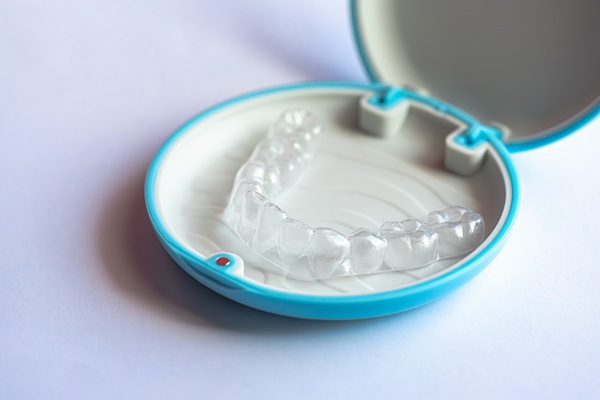
When most people hear the word "Invisalign," the immediate mental image is one of cosmetic transformation. We think of teenagers wanting to avoid the "metal-mouth" look of traditional braces, or working professionals preparing for weddings, job interviews, or public speaking engagements. The cultural narrative surrounding clear aligners has long been dominated by the quest for the picture-perfect, Hollywood smile.
However, viewing clear aligners strictly through a cosmetic lens misses the vast majority of their clinical utility.
In modern dentistry, alignment is a fundamental component of structural integrity, disease prevention, and musculoskeletal harmony. When Dr. Steven Spivak evaluates a patient for Invisalign, the assessment goes far deeper than the superficial aesthetics of a smile. The primary focus is always on biomechanics, functional efficiency, and long-term biological health.
Malocclusion, the clinical term for misaligned teeth or an incorrect bite, is not merely a visual imperfection; it is a progressive functional defect. Leaving teeth crowded, rotated, or improperly occluded can lead to a cascade of oral health complications that worsen over time.
This comprehensive guide explores the structural, physiological, and preventive health benefits of Invisalign therapy, demonstrating why straightening your teeth is one of the most significant investments you can make for your overall systemic well-being.
1. Periodontal Health and Advanced Biofilm Management
The mouth is home to a complex ecosystem of bacteria known as the oral microbiome. While many of these bacteria are harmless, certain strains form a sticky, colorless film on the teeth called dental plaque or biofilm. If this biofilm is not mechanically removed through daily brushing and flossing, it hardens into calculus (tartar), triggering an inflammatory response from the body. This inflammation is the root cause of gingivitis and, eventually, periodontitis (gum disease).
Herein lies the first and most critical non-cosmetic benefit of Invisalign: it fundamentally alters your ability to maintain oral hygiene.
The Danger of “Plaque Traps”
When teeth are crowded, overlapping, or severely rotated, they create physical architecture that is highly hostile to standard hygiene tools. No matter how meticulously you brush or how often you floss, standard toothbrushes and string floss simply cannot navigate the tight, irregular spaces created by severe crowding.
These areas become chronic "plaque traps." Because the biofilm in these zones remains undisturbed, the bacteria mature into more virulent, anaerobic strains. Over time, this localized bacterial accumulation causes:
- Chronic inflammation of the gingival tissues (bleeding, swollen gums).
- The breakdown of the periodontal ligament, which anchors the tooth to the bone.
- Progressive bone loss, which can ultimately lead to tooth mobility and tooth loss.
The Invisalign Advantage for Hygiene
Traditional fixed orthodontic appliances (metal brackets and wires) notoriously exacerbate this issue. Braces introduce dozens of new structural obstacles, turning the entire mouth into an architectural challenge for hygiene. Patients with traditional braces often experience localized decalcification (white spot lesions) and heightened gingival inflammation during treatment because thorough cleaning is so difficult.
Invisalign entirely bypasses this issue. Because the clear aligners are completely removable, there are no brackets to brush around and no wires to thread floss under. You remove the trays, brush and floss with the exact same ease as someone with naturally straight teeth, and place the trays back in.
Furthermore, once Invisalign treatment is complete and the dental arches are properly aligned, the chronic plaque traps are permanently eliminated. The smooth, predictable contours of a well-aligned arch allow your toothbrush bristles and floss to easily access all surfaces of the tooth. By restoring proper alignment, Dr. Spivak helps you shift from a state of constant, defensive damage control against biofilm to a highly effective, predictable routine of preventive oral health.
2. Biomechanical Occlusal Balance and the Protection of Natural Tooth Structure
Your teeth are engineered to withstand incredible forces. Every time you chew, bite, or unconsciously clench your jaw, your teeth bear significant pressure. However, the human dentition is only designed to handle these forces when they are distributed evenly across the entire arch.
When your bite is misaligned, this balanced distribution breaks down completely. Certain teeth end up absorbing a disproportionate amount of kinetic force—a condition known as occlusal trauma.
The Destructive Path of Attrition and Enamel Fatigue
When a single tooth or a small group of teeth makes premature contact when you close your mouth, it experiences repetitive, microscopic trauma. Over years, this imbalance manifests as accelerated structural wear and tear:
- Attrition: The flattening and thinning of the biting surfaces. Patients with deep bites or crossbites often experience severe shortening of their anterior (front) teeth, exposing the softer, highly sensitive underlying dentin layer.
- Chipped and Fractured Edges: Enamel is incredibly strong, but it is brittle under shear force. Teeth that collide at incorrect angles are highly prone to micro-fractures, which eventually cause visible pieces of the tooth to chip away during normal chewing.
- Abfraction Lesions: When a tooth is subjected to eccentric, off-axis forces, it flexes slightly at the gumline. This constant micro-flexure causes the ultra-thin enamel prisms near the root to pop off, leaving deep, notch-like grooves at the neck of the tooth. These lesions are not caused by cavities, but by purely mechanical stress. They can cause severe root sensitivity and leave the tooth structurally vulnerable.
Preventing “Cracked Tooth Syndrome”
One of the most frustrating conditions in clinical dentistry is cracked tooth syndrome, where an invisible, microscopic fracture propagates through the internal structure of a tooth. This often happens to teeth that are structurally overloaded due to an unbalanced bite. These cracks frequently require extensive root canal therapy and full-coverage crowns to salvage, and in severe cases where the crack splits the root vertically, the tooth must be extracted.
Invisalign acts as a comprehensive structural intervention. By systematically moving the teeth into an ideal, harmonious occlusion, Dr. Spivak ensures that when you bite down, your posterior teeth absorb the heavy vertical forces, while your anterior teeth properly guide your jaw movements. This balanced engineering dramatically reduces the structural fatigue on individual teeth, preserving your natural enamel and saving you from a lifetime of restorative dental work.
3. Musculoskeletal Harmony: Alleviating TMJ Strain and Jaw Pain
The human masticatory system is an intricate complex of bones, muscles, ligaments, and nerves, all anchored by the temporomandibular joints (TMJ) located just in front of your ears. The TMJ is one of the most complex, heavily utilized joints in the human body, capable of rotational, gliding, and hinge movements.
For this complex system to function comfortably, there must be a state of harmony between where your muscles want your jaw to close and where your teeth force your jaw to close. When your teeth are misaligned, that harmony is shattered.
The Mechanism of Myofascial Pain and TMJ Dysfunction
If you have a malocclusion—such as an overbite, underbite, or crossbite—your jaw cannot close into a natural, rested position. Instead, the jaw muscles must actively pull the joint out of its ideal alignment just so the upper and lower teeth can interlock to chew food.
This means your masticatory muscles (such as the masseter and temporalis) are working double-time. They never truly get to relax. This constant, low-grade muscular overwork leads to:
- Muscle Hypertonicity and Spasms: The muscles become tight, fatigued, and plagued by trigger points, leading to chronic facial pain.
- Tension Headaches: The temporalis muscle fans out across the side of your head. Chronic tension in this muscle is a primary, frequently misdiagnosed cause of severe daily tension headaches.
- Internal TMJ Derangement: As the jaw continually shifts to accommodate an incorrect bite, it puts uneven pressure on the delicate articular disc inside the TMJ. This can cause the disc to slip out of place, leading to the clicking, popping, catching, or painful locking of the jaw.
Decompressing the Joint with Invisalign
Invisalign therapy treats the root mechanical cause of this neuromuscular imbalance. By repositioning the teeth, Dr. Spivak aligns the dental arches so that your maximum intercuspation (the way your teeth fit together) coincides seamlessly with the natural, anatomically unstrained position of the temporomandibular joint.
Furthermore, during the active phases of Invisalign treatment, the physical clear plastic trays act as a microscopic bite plane. This thin layer of material separates the teeth slightly, preventing them from locking into their old, destructive biting patterns and allowing the hyperactive jaw muscles to begin relaxing almost immediately. Correcting the bite decompresses the joint, eliminates the need for muscular compensation, and directly reduces or eliminates chronic jaw soreness, neck tension, and headaches.
4. Physiology, Functional Mastication, and the Digestive Connection
It is easy to forget that the oral cavity is not an isolated system; it is the entryway to the gastrointestinal tract. Digestion does not begin in the stomach or the small intestine; it begins explicitly in the mouth.
Proper digestion is highly reliant on two primary mechanical actions within the oral cavity: mastication (chewing) and insalivation (mixing food with salivary enzymes).
The Impact of Malocclusion on Nutritional Absorption
When a patient has a severe open bite, crossbite, or severe crowding, the surface area of the teeth that actually touch and grind food—known as the occlusal table—is severely diminished. You might have 32 teeth, but if your bite is misaligned, you may only be utilizing a fraction of them to effectively masticate your food.
When food cannot be thoroughly broken down into a fine, easily digestible paste, it enters the stomach in fragments that are far too large. This causes a cascade of physiological stresses:
- The stomach must secrete significantly higher levels of gastric acid to break down the large food masses, increasing the risk of acid reflux, heartburn, and gastritis.
- The overall digestive transit time slows down, frequently resulting in bloating, abdominal discomfort, and metabolic inefficiency.
- The body cannot optimally extract vitamins, minerals, and micronutrients from the food, as the digestive enzymes cannot penetrate to the center of large, unchewed food particles.
By utilizing Invisalign to establish a fully functional, highly efficient occlusal table, Dr. Spivak ensures that your upper and lower teeth meet in perfect harmony. This restores your mouth’s ability to effortlessly pulverize food, setting up your entire digestive system for success and supporting your systemic, nutritional health.
5. Speech Stabilization and Phonetic Correction
Speech is a highly complex motor skill that requires incredibly precise coordination between the lungs, vocal cords, tongue, lips, and teeth. Your teeth act as a vital structural boundary for the tongue and control the airflow leaving your mouth.
When teeth are significantly misplaced, spaced too far apart, or angled incorrectly, it alters the physical space available for proper articulation. This structural disruption frequently manifests as functional speech impediments:
- Lisps (Sibilant Distortion): If there are large gaps between the front teeth (diastemas), or if an overbite prevents the front teeth from overlapping correctly, air escapes too freely when trying to pronounce “S” or “Z” sounds, causing a persistent lisp.
- Whistling Sounds: An incorrect angulation of the upper anterior teeth can channel airflow in a way that creates an involuntary whistling noise during rapid speech.
- Slurred or Muffled Articulation: If the lower jaw is forced backward due to a severe overbite, or if crowding restricts the tongue’s natural range of motion, the tongue cannot make clean, crisp contact with the palate or the back of the teeth. This results in speech that sounds slightly slurred or fatigued.
Many adults struggle with these subtle phonetic challenges for decades, assuming it is an unchangeable quirk of their personal speech pattern. In reality, it is often a purely mechanical issue.
Invisalign allows Dr. Spivak to precisely alter the dental boundary. By closing gaps, correcting overjets, and creating a smooth, symmetrical arch, the tongue is given the exact anatomical environment it needs to articulate clearly. As the teeth move into their proper alignment, airflow is regulated naturally, stabilizing phonetics and allowing for effortless, confident, and clear verbal communication.
The Invisalign Process with Dr. Steven Spivak: A Modern, Health-Focused Approach
Achieving these profound functional health benefits requires meticulous, highly individualized planning. Invisalign is not a one-size-fits-all product; it is a highly advanced modality that depends entirely on the clinical expertise of the provider designing the movements.
When you undergo Invisalign therapy with Dr. Spivak, your journey is rooted in advanced digital technology and comprehensive, biological planning:
- Advanced 3D Digital Scanning: The process begins without gooey, uncomfortable traditional impression materials. Instead, we utilize a high-definition iTero digital scanner to capture a highly accurate, three-dimensional mathematical model of your entire dentition and jaw alignment.
- Biomechanical Simulation: Using this digital model, Dr. Spivak utilizes advanced software to map out the exact movement of every individual tooth. This is where clinical expertise is vital: Dr. Spivak doesn’t just look at how the teeth look on the screen, but calculates the precise force required to move roots through bone safely, ensuring the health of the dental nerves and surrounding periodontium.
- Custom Fabrication: Once the treatment design is perfected, a series of custom, medical-grade, BPA-free clear aligners are manufactured specifically for your unique anatomy. Each set of trays is worn for approximately one to two weeks, gently and incrementally shifting your teeth closer to their ideal structural positions.
- Comprehensive Clinical Monitoring: Throughout your treatment, you will visit our office periodically so Dr. Spivak can verify that your teeth are tracking perfectly according to the custom biological plan. These visits ensure your treatment progresses safely, efficiently, and comfortably.
Conclusion: Investing in a Lifetime of Structural Health
Your smile is an integral part of who you are, but its most important role is to serve as a highly functional, comfortable, and self-cleaning mechanism that supports your daily life.
Choosing to pursue Invisalign therapy with Dr. Spivak isn't an act of vanity—it is a proactive, deeply impactful step toward preserving your natural tooth structure, protecting your jaw joints from chronic pain, reducing your long-term risk of dental disease, and supporting your body's digestive health.
If you are tired of dealing with chronic jaw pain, struggling to floss between crowded teeth, or noticing that your teeth are chipping and wearing down prematurely, it is time to look at alignment through a brand-new lens.
Take the First Step Toward Functional Oral Health
Don't wait for mechanical strain to turn into permanent structural damage or chronic pain. Discover how a healthy, balanced bite can transform your daily comfort and long-term well-being.
Schedule a comprehensive, technology-driven Invisalign consultation with Dr. Spivak today. Let’s build a smile that functions as beautifully as it looks.
Request an appointment here: https://www.dentexdentalca.com or call Dentex Dental Specialty Group at (310) 895-2446 for an appointment in our Culver City office.
Check out what others are saying about our dental services on Yelp: Invisalign Dentist in Culver City, CA.
Related Posts
Starting a clear aligner treatment with an experienced invisalign dentist means you can achieve a straighter, more confident smile without the discomfort of metal braces. This modern approach to orthodontics prioritizes both precision and transparency to deliver results that look natural and feel great. Here is what you can expect from clear aligner therapy with…
Dental implants are the most popular teeth replacement option these days. These oral prosthetics look and feel like real teeth, plus they do not require anything besides brushing and flossing to keep them in excellent condition.Dental implants do not directly replace missing teeth; instead, they replace the roots that come out with teeth when they…
When you have severe tooth decay, you should seek treatment immediately. The most common treatment method for tooth decay is a dental filling. Dental fillings restore the affected tooth to its normal shape and function and preserve its structure. The following blog explores the different types of dental fillings and how to ask a dentist…
Dental crowns are an investment into oral health that requires proper care and maintenance to ensure longevity and function. Adopting a consistent oral hygiene routine can keep the crown in pristine condition. The following blog will discuss techniques to help you maintain and care for your new dental crowns.Maintaining good oral hygiene habits is crucial…